Mental health comparison: Pathologic 3 and Pathologic 4
CW: spoilers for Pathologic Classic and Pathologic 3; minor spoilers for Pathologic 2
CW: self-harm and suicide mention
Bachelor
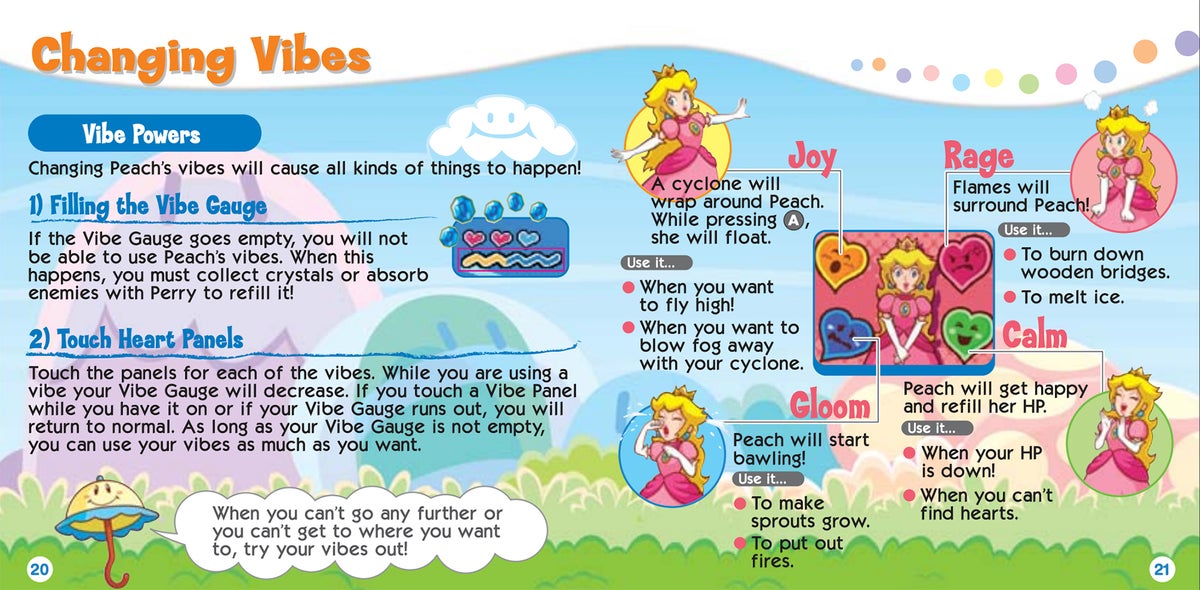
When I played Pathologic 3, I didn’t like the mental health system at first. The two stat ends "mania" and "apathy" suggest bipolar disorder, but in bipolar the phase doesn’t switch every two minutes. When manic, you can run fast, but you lose health, which as far as mechanical interpretations of human emotions go, fits Super Princess Peach better than Pathologic. And going from seven stats of "survival of the body" to two stats of "survival of the mind" looked like the game was getting casual.
That first impression was wrong. For the last few years I was studying psychiatry on a very technical, mechanistic level, and that biased my perception. If they were to task me with making mental health a game mechanic, I would try to engineer a simplified but realistic model of the gameplay-relevant parts of the psyche. Ice-pick Lodge did it better, and made it genius. They made the mechanic first and foremost relatable. This initially simple and easy to understand system produced a constant torrent of "mood"s, "literally me"s, and "#relatable"s. I have to do "survival of the mind" and fight against my own head all the time in real life, and yes, it feels exactly like it does in the game. Lack of technical accuracy is weirdly an upside: the gameplay covers the most general kinds of psychic struggle for all kinds of mentally ill people, without committing to a definite diagnosis.
Some moments from my life that the game managed to capture:
Life: Sometimes I’m too angry and wired to talk normally. The thoughts keep racing and overtaking each other, I speak gibberish, talk with an unaccounted aggression, and offend innocent people for no good reason. When this happens, it’s best to take a break and calm my nerves, which I usually do by going to the nearest playground and sitting on a swing or fiddling with machines. Stimming with heavy iron and getting some fresh air help me get normal again.
Game: I may enter an NPC’s house, but they refuse to talk to me because of too much mania. I have to go outdoors and find a source of apathy – such as swings or merry-go-rounds. Nerves unfrayed, I can go back to the social interaction.
Life: Some places are just passively infuriating. They’re loud and bright and distracting and full of triggers. Just being in them files down my brain cells, and the more I stay in them, the more high strung and anxious I become. This can be exhausting. When I was a child, and my parents took me to a mall, I could just shut down and collapse within an hour.
Game: Some objects passively generate mania as long as you’re nearby. Train graveyard is especially deadly because of this – aggravating objects are at every step of the maze, and if you stay there for too long, mania will drain your health dry.
Life: When depression eats me alive, and I don’t have the strength to even get out of bed, self-harming can bring me to senses. I usually cut my skin, but sometimes I can burn or bite myself, poke with needles, drink boiling water, or (my premium trademarked technique) snort some salt. It mobilizes me for a couple minutes, and that may be enough to start doing something real and break the cycle.
Game: Mania generators are mostly things that inflict pain or discomfort. Hard iron you can kick, screechy contraptions you can mess with to trigger misophonia, fire, poison. If you’re deep into apathy and can barely move, you just need to drag yourself to one of those, and it might give you enough movement speed to reach an actual solution.
Life: Time seems to just disappear when I’m depressed. The day just started, and then I blink and it’s the evening. I look back at the last week, and nothing happened, I was just staring into a wall or doomscrolling and got nothing done. It doesn’t even stay in memory.
Game: The higher you apathy, the faster it drains your amalgam, "liquid time". Might not even be enough to make it to tomorrow.
Life: Mistakes and failures, even if trivial, can send me down the spiral of rumination and depression. I might say something dumb early in the morning in an internet argument that means literally nothing even in the puny scheme of things, and knowing that is not enough for me to prevent the rest of the day from sinking.
Game: In dialogues, you can take a chunk of apathy damage if you misspeak or make a mistake or just make yourself look worse than the interlocutor. In a few places Dankovsky can lose in a battle of wits to children, and that dumps his mental health deep into the blue.
Life: In some particularly stressful moments, my head aches, psychosomatics screws with every part of the body, and migraine threatens to creep in. Ibuprofen somewhat helps, and on a bad day I can just swallow it by the bottle.
Game: On some days it’s basically impossible to keep the mental balance and still have enough time to do everything. It’s often easier to just stay in chronically high mania and replenish health by eating a calomel every five minutes.
Life: If I lapse in control and hurt someone – usually with words, sometimes with fists – I regret it immediately. It’s a reliable way to send me down the spiral of depression and self-loathing. Tearing into people during a violent flashback is only fun for the first five minutes – when I realize what I had done, I plunge into the opposite extreme and collapse into the abyss.
Game: If you kill a person – which is almost never a good idea and only happens accidentally – then the hit of apathy is big enough to send you from deep red to deep blue.
Life: Sometimes a guy says something so stupid I want to shoot myself on the spot.
Game: Sometimes a guy says something so stupid I want to shoot myself on the spot.
This seesaw of mania and apathy – or, to say it in a less relatable but more technically correct way – hyperactivation and hypoactivation – reflects my day-to-day experience better than any complex and veritable model of a psyche could. The 12-day reveal in the Polyhedron was the perfectly harmonious final note. The game designer who came up with it has my respect.
Changeling
All of this is not a mechanic in Pathologic Classic, and we don’t get to learn abour Bachelor’s mental health. But we have a playable Changeling, whom I also find very relatable in the same way. Daniil’s struggle is very generic; it shows a battle against your own head in the most general sense that would be relatable to anyone for whom "survival of the mind" is an issue. Clara, on the other hand, reflects my dissociative disorder specifically. She’s relatable to me, personally, because I'm the Shifting Mound; most people aren’t.
Life: Dissociative alters are in some sense different versions of me, and in some other sense they are different people in the same body. The boundary between those is undefined and blurry. You have to look at it differently in different contexts.
Game: In a sense there are "two" Claras – the one we play as, and her "twin sister". The exact nature of the "sister" is difficult to grasp for most of the game, but the final dialogue in the Theater gives the direct and unambiguous answer: it’s just one Clara, just different in different situations. "The same being sang in two different voices" – Tragedian.
Life: Alters usually1 show up for a purpose, as a reaction to a difficult or dangerous situation. A hard problem that one can’t handle in their current state might trigger a "split".
Game: Clara invents the "sister" when they start accusing and pressuring her, and she needs to avoid blame to save her life. From this moment the plague personified and the miracle-worker become two different people.
Life: When I talk to people, I don’t always know why I say this or that. The words just say themselves, and they often contradict what I think. Often I say things that I "don’t know", and it feels like I’m making up lies on the spot for no good reason – but then it turns out to be true, a different alter knew that, and the words came from them. Sometimes seemingly neutral and unoffensive words may make me angry, or sad, or scared for no reason that I’m aware of – there is always a reason, it just doesn’t always reach my conscious perception.
Game: Changeling’s dialogue options, especially at the start of her route, are confusing. They contain information that the player had no way of knowing; or sometimes directly contradict what the player knows. They may sound completely out of place, or express emotions that make no sense for the moment. The other two playable characters’ dialogue options more-or-less reflect what the player might have said at that moment, but Clara’s words are always covered in a fog of unrealness. At the end all of this makes sense, and on a repeat playthrough you can see where it all was coming from.
Life:It’s normal and typical to not know which alter is fronting. DID is a covert disorder; amnesia surgically covers up switches, and alters hide from other alters in the same way they hide from other people. Mixed, "blurry" states, when the boundary between alters is dissolving, and several people front at the same time in different ways, can also happen. In those cases the primary feeling I have is confusion – who am I? where am I? what’s going on? what year is this?
Game: Clara never fully knows who she is – the saint, or the Plague. Sometimes she’s unaccountably one when she should have been the other. Even in the same dialogue some words clearly come from the Plague, and some from the saint. On day 5 she enters the Cathedral as the saint, to make sure everyone is healthy and to make their day better; but only come morning of day 6 she realizes that she was actually the Plague at that time, and she killed them all. Her memory of the incident is hazy and contradictory, because she was hazy and contradictory.
Life: Unstable identity means constant internal conflict in the most literal sense of that word. I can contradict myself, sabotage myself, pull myself in different directions, and just generally not be on the same page. I simultaneously want to destroy the world and to save everyone.
Game: Clara is a creature of contradiction on every level. Physically, metaphysically, metanarratively, all her aspects contradict each other and work against each other. Any attempt to describe her as one consistent character, or even several consistent characters, are doomed to fail. She is the Plague, and she is the saint.
(Also Clara is a thief, and I am a thief. This is not a coincidence because nothing is ever a coincidence)
What does that mean for the upcoming P4? I don’t know how much the developers of Classic knew about DID, and how much of all that was intentional or accidental. But P2 and P3 built an excellent foundation for a realistic and relatable DID representation.
In "View from the Shifting Mound" I keep returning to a cornerstone symptom of the disorder – "reverse solipsism", that I exist only in other people’s heads, define myself through other people, and stop existing when not observed. I talked about the importance of connections with other people for developing a stable identity, how much the lack of those connections made my identity fragile and protean, and how much other people "nail down" my self-perception by giving me attention and support. I touch upon, though not elaborate, about how every human’s identity is one way or another built around other people.
In P2 there’s a wonderful scene in the Theater Dream, where the three healers argue about which part of the body is the most important. Haruspex says organs and blood; Bachelor says brain; Changeling says skin. Skin, for the Changeling, is at the same time the border around the person, defining their extent and separating them from other people; and the contact surface that they can touch other people with. When she touches people, she leaves behind a piece of herself, and by this she changes them. In the sequels, Clara talks about those things on many occasions – that people are defined through touching other people, that people need compassion and understanding from others.
This ties in perfectly to how I see my dissociative disorder. This is the most fundamentally relatable part of the Changeling for me – that through dealing with the same kind of problems, she reaches the same conclusions and forms the same general paradigm about what defines a person.
Haruspex’s "survival of the body" was not particularly relevant to me. I never went hungry, my physical health is immaculate, and I never felt like a part of a family or a community. Haruspex’s paradigm is alien to me, no matter how much I love P2 and how much I can understand it intellectually.
Bachelor’s "survival of the mind" hit much closer to home. Simon Kain’s perspective on death is very intuitively understandable to me, and Simon did nothing wrong. But it’s only one side of the problem. It’s an important insight, but it’s not the entire solution, and not all of us find it satisfactory. This is the way my early techbro alter saw people, with all those dreams of singularity and digital consciousness, for whom heaven looked like a personal utopia, with other people barely an afterthought. Even then I felt some kind of tension, as if something was missing – and now I know what that was.
The upcoming Changeling Route, the way I see it, contains the last piece of the puzzle. Haruspex sees a human as a depersonalized part of a bigger organism; and Bachelor, conversely, as a hyper-individualized ego, almost separate from the physical world. Here, Changeling, like in Classic, can find a compromise between two contradictory ideas. The skin is both a boundary and an interface. People are separate, but they exchange pieces of themselves. A person exists as part of a society, but doesn’t have to dissolve in it.
Mechanically, "survival of the body" and "survival of the mind" helped teach the first two paradigms. What is Clara’s equivalent?
For me personally, "survival of the self" is an essential need to see and be seen. To give and receive attention. To understand and be understood. Without other people, the world doesn’t feel real. If no one is there to perceive me, I fall into oblivion. Conversely, when others see me, believe in me, support me, I bloom. I become what others see me as, and those parts of others that I can see, become parts of me.
Clara’s survival has to revolve around her Bound.
Artemy’s survival relied on other people, too, but as a depersonalized and uniform hivemind. Daniil saw others as chess pieces in his game; for him, people are strategic units. Clara, on the other hand, will get to know them personally, see them as unique and deep individuals, feel their emotions, and take parts of them into herself. In Classic, all the "humbles" were violators of the Law, full of regrets and seeking redemption. Or, more psychologically accurately, they held to trauma. Clara, one by one, draws out their demons, and gives them kindness, and forgives them. And they believe in her, they see her as a miracle-worker, and if she lets those parts of them to enter her self, she will become the miracle-worker.
Clara’s "survival of the self" has no place for hunger, health, or infection stats. To survive, she needs to be seen and understood. She has to work with her trauma, and her Bound’s trauma, to the same extent. Failures make her less stable and less real; she wouldn’t know who she is, she will kill those she wanted to heal. "Death" for her is to lose herself; dissolve in a herd as Artemy says, or crystallize into a thing-in-itself, as Daniil wants. I don’t know how to implement that mechanically. Dissociation stat? A relationship stat for each Bound? Shards of other people in her head going ping-ping like Disco Elysium skills? I will mull over the exact implementation, but I trust that Ice-Pick Lodge can come up with better things than I could.
This is my prediction on how Clara’s survival will work. When the game releases, we’ll see how close I was.
not always, I know, don’t @ me
 Reply by email
 Leave anonymous comment